The following is a story that was written by Ron Rubidoux about one of his favorite stallions.
"In the winter of 1992, the BLM captured 140 Sulphur horses. They had taken an aerial count, and there were too many horses on

the range. The herd needed to be thinned out, so they decided not to be choosy as far as putting horses back. Everything caught would be put up for adoption. Of the horses, there was a little of everything including a few exceptional stallions. I went to the corrals, where they processed the horses, to get some pictures. At the time they had only caught about half of the 140 horses. While there I saw a three year old grullo stallion that had leg stripes I could hardly believe. He was the one I wanted. There was also a five-year-old dun stallion with unusual markings. On each side of his dorsal stripe was another stripe from his withers to his croup, giving him the appearance of having three stripes along his back. He also had the shadowing of shoulder bars making the cross. He was apparently captured, when young, by so called "cowboys" who ride down wild horses, rope and catch the slowest, and proclaim their conquest by cutting off half of one of the horse's ears. The tip of one of the three striped horse's ears was cut off, which greatly marred his appearance. The practice is illegal and isn't common, but does occur on the Sulphur Herd Management Area.
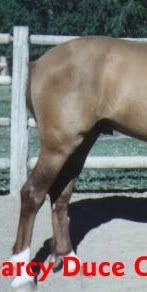
The adoption I attended that year was held in March, at Spanish Fork, Utah. Only half the horses were there. The other half were to be taken to an adoption site in southern Utah the following month. The three year old grullo stallion was there along with the three striped dun, which I really wasn't interested in, as his conformation was not the best. There was also another exceptional looking zebra dun stallion that had leg stripes equally as good, if not better than the grullo stallion. He was a much better looking horse than the grullo and three striped dun as far as conformation goes. His number was 705, and though he caught my eye, he was five years old, and I wanted a younger horse. I overheard a lot of other people there talking about him, but his age must have made them leery also.
I was loaded for bear at that adoption. By then I was wise to how things worked, so I recruited friends and relatives to apply for the adoption, in order to increase my odds. I had ten people there, including myself, registered for the draw. There were close to 70 Sulphur horses and over 200 people registered. It all went to my head, and I wanted as many horses as I could haul out of there. My first choice was the three-year-old grullo

stallion, second was a yearling grullo stud colt, and last was 705. There were also four nice looking mares that I liked. All my friends were telling me to go for 705 first, but I still wanted a younger stallion.
As it turned out, someone else chose the three-year-old grulla stallion first. Next went the yearling stud colt. The tensi on was killing me, and then a friend's name was called. I told him to call out 705. He did, and I had the zebra dun stallion. I was lucky to get out of there with him, as I didn't get any of the mares I wanted either. During the loading, of all the horses, 705 was the only one to try and jump one of the loading gates, breaking it down. I was wondering what I had gotten myself into, but I had my stallion. I was thinking as I drove home, it was just by chance that I got him.
Months later, I was talking to Gale Bennett, from BLM, who is probably their top horseman. He told me that when they captured Chance, because he was such a good looking horse, they were thinking about putting him back on the range, but since they needed to thin out, decided to go ahead and put him up for adoption. Lucky for me they did.
As far as I'm concerned the Mountain Home Range lost one of it's best stallions, but the mountain's loss was my gain. A little over a year later inspectors from the Spanish Mustang Registry came to Utah to inspect my horses, along with a few others. All of my horses were accepted. Now 705 has a new name and number, Sulphur's Chance (SMR 2028). The ultimate compliment was Emmett Brislawn taking such a liking to Chance when he saw him, and commenting to me, a number of times, how he would be willing to load up Chance to take back to his Cayuse Ranch. Last summer when my family and I visited the Brislawns, and when given a tour of their ranch, Josie mentioned how she thought Chance would look good there. Her comment made me feel good, and I suppose if I wasn't able to keep him, that is where I would want him to be. I know he'd be safe and well taken care of. During the inspection, I overheard the owner of a Sulphur mare asking Bill Stabler, which of the stallions would he recommend breeding the mare to, and Bill said Chance.



 the range. The herd needed to be thinned out, so they decided not to be choosy as far as putting horses back. Everything caught would be put up for adoption. Of the horses, there was a little of everything including a few exceptional stallions. I went to the corrals, where they processed the horses, to get some pictures. At the time they had only caught about half of the 140 horses. While there I saw a three year old grullo stallion that had leg stripes I could hardly believe. He was the one I wanted. There was also a five-year-old dun stallion with unusual markings. On each side of his dorsal stripe was another stripe from his withers to his croup, giving him the appearance of having three stripes along his back. He also had the shadowing of shoulder bars making the cross. He was apparently captured, when young, by so called "cowboys" who ride down wild horses, rope and catch the slowest, and proclaim their conquest by cutting off half of one of the horse's ears. The tip of one of the three striped horse's ears was cut off, which greatly marred his appearance. The practice is illegal and isn't common, but does occur on the Sulphur Herd Management Area.
 stallion, second was a yearling grullo stud colt, and last was 705. There were also four nice looking mares that I liked. All my friends were telling me to go for 705 first, but I still wanted a younger stallion.


